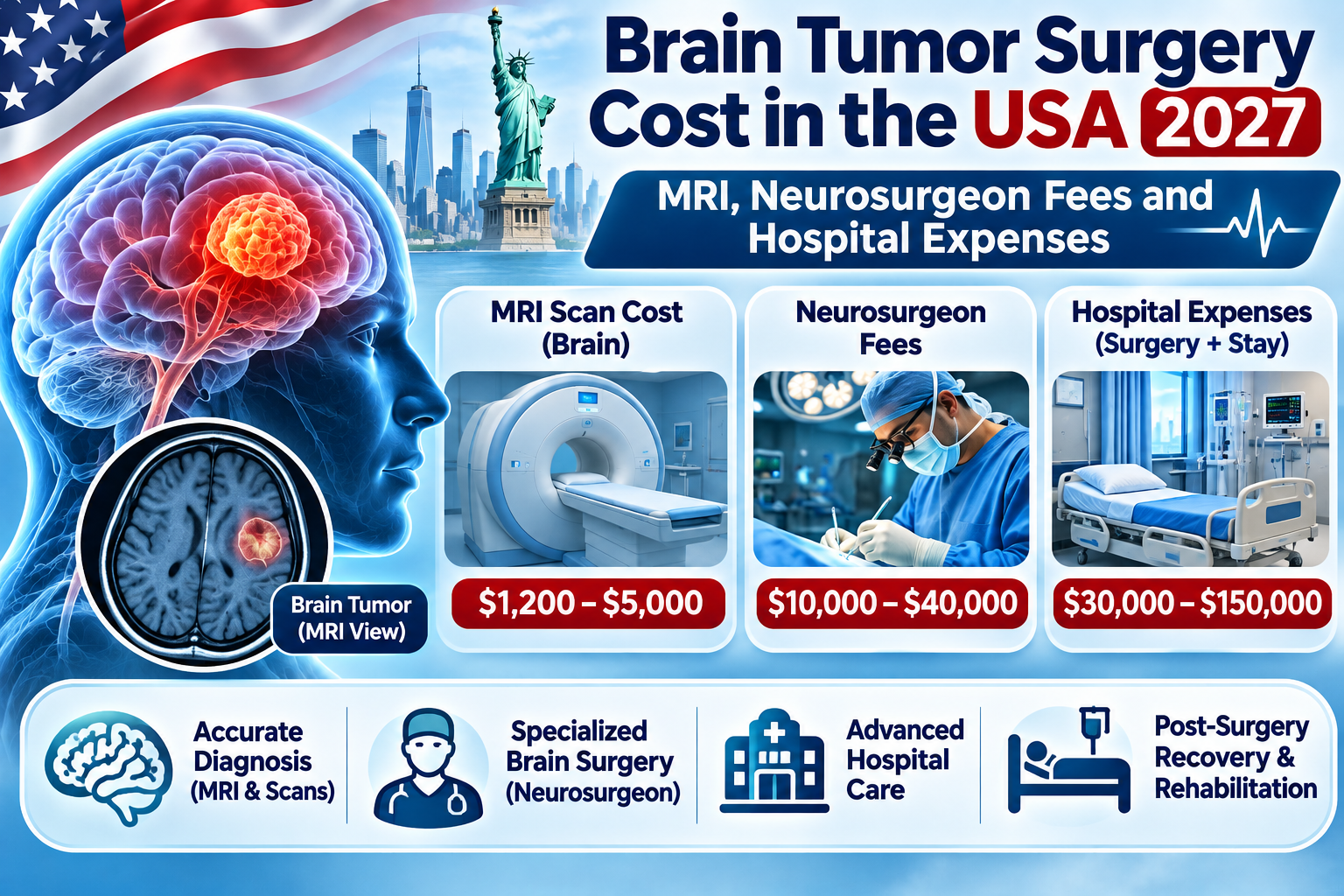
Brain tumor surgery is among the most complex medical procedures performed in the United States. For patients and families preparing for treatment in 2027, understanding the potential expenses is essential for making informed healthcare and financial decisions. The overall cost can include MRI scans, neurosurgeon fees, anesthesia, operating room charges, intensive care, medications, and follow-up appointments.
In the United States, the estimated cost of brain tumor surgery for uninsured or self-paying patients can range from approximately $50,000 to $150,000 or more, depending on the procedure and hospital. Highly complicated operations involving extended hospitalization or intensive care may result in significantly higher bills. These figures are broad planning estimates rather than confirmed 2027 prices.
This comprehensive guide explains brain tumor surgery costs in the USA for 2027, including diagnostic imaging, specialist fees, hospital expenses, insurance coverage, and practical ways to manage medical bills.
Understanding Brain Tumors and Surgical Treatment
A brain tumor is an abnormal growth of cells within the brain or surrounding structures. Tumors may be benign, meaning noncancerous, or malignant, meaning cancerous. Both types can cause serious complications when they press against important brain structures.
Symptoms may include persistent headaches, seizures, vision problems, difficulty speaking, balance disorders, or changes in memory and behavior. However, these symptoms can also result from other medical conditions, making professional evaluation essential.
Not every brain tumor requires immediate surgery. Treatment depends on tumor size, location, growth rate, pathology, symptoms, and the patient’s overall health.
Common surgical approaches include:
- Craniotomy: A procedure involving temporary removal of part of the skull to access and remove tumor tissue.
- Endoscopic surgery: A minimally invasive approach used for selected tumors.
- Awake craniotomy: A specialized procedure that allows neurological functions to be monitored during certain operations.
- Stereotactic biopsy: A procedure that collects tissue samples to establish a diagnosis.
The surgical technique selected can significantly influence total treatment expenses.
Brain Tumor Surgery Cost in the USA in 2027
The total cost of brain tumor surgery varies considerably between hospitals and individual cases. Academic medical centers, specialized neurosurgical hospitals, and private healthcare facilities may use different pricing structures.
For financial planning, patients should distinguish hospital charges from negotiated insurance payments and actual out-of-pocket expenses. These amounts are not interchangeable.
Estimated USA Cost Breakdown
| Medical Service | Estimated Cost (USD) |
|---|---|
| Initial Neurosurgeon Consultation | $200–$600 |
| Brain MRI Scan | $500–$3,500 |
| CT Scan | $300–$2,000 |
| Neurosurgeon Professional Fees | $5,000–$25,000+ |
| Anesthesia Services | $2,000–$8,000 |
| Hospital and Operating Room Charges | $20,000–$80,000+ |
| Intensive Care Unit | $3,000–$10,000+ per day |
| Medications and Follow-Up Care | $500–$5,000+ |
Important: These are illustrative 2027 planning ranges, not verified national averages or guaranteed hospital quotations. Individual services may already be included in a bundled surgical price. The amounts should not be added together automatically.
MRI Scan Costs Before Brain Tumor Surgery
Magnetic resonance imaging is one of the most important diagnostic tools used to evaluate brain tumors. MRI provides detailed images that help specialists determine the tumor’s location, dimensions, and relationship to surrounding structures.
In 2027, patients may encounter MRI prices ranging from several hundred dollars at independent imaging centers to several thousand dollars at hospital-based facilities.
Several factors influence MRI expenses:
- Whether imaging requires contrast material.
- Whether specialized functional MRI sequences are necessary.
- The location and type of imaging facility.
- Insurance network participation and negotiated rates.
- Additional interpretation fees charged by radiologists.
Some patients require multiple scans before and after surgery. Repeated imaging can increase total diagnostic expenses, particularly when long-term monitoring is necessary.
Neurosurgeon Fees and Surgical Complexity
Neurosurgeons are highly trained specialists responsible for performing delicate operations involving the brain and nervous system. Their professional fees reflect surgical complexity, specialized expertise, and the resources required for treatment.
Operations involving tumors near speech, movement, or vision centers may require advanced mapping technologies and specialized monitoring.
Factors affecting neurosurgeon fees include the surgeon’s experience, procedure duration, tumor accessibility, and whether multiple specialists participate in the operation.
Patients should confirm whether the surgeon’s professional fee is included in the hospital estimate. Separate invoices may be issued by anesthesiologists, radiologists, pathologists, and other medical professionals.
Hospital Expenses and Intensive Care Costs
Hospitalization represents a substantial portion of brain tumor surgery expenses. Patients may require several days of monitoring following a craniotomy, depending on their recovery and neurological condition.
Hospital charges can include operating room equipment, nursing services, laboratory testing, medications, surgical supplies, recovery rooms, and specialized monitoring.
Some patients require admission to an intensive care unit immediately after surgery. ICU treatment may involve continuous neurological observation, specialized medications, respiratory support, or management of postoperative complications.
Longer hospital stays generally increase expenses. Infections, bleeding, neurological complications, or additional procedures can further increase the financial burden.
Factors Influencing Brain Tumor Surgery Prices
1. Tumor Size and Location
Tumors located near critical brain structures may require more complicated surgical approaches. Advanced navigation equipment, neurological monitoring, and longer operating times can increase expenses.
2. Hospital Type and Geographic Location
Hospital pricing differs across the United States. Large metropolitan medical centers may have higher operating costs than smaller regional hospitals, although negotiated prices and individual hospital policies can produce substantial exceptions.
3. Health Insurance Coverage
Insurance coverage strongly influences what patients actually pay. Deductibles, copayments, coinsurance, provider networks, and annual out-of-pocket limits can affect financial responsibility.
Coverage for medically necessary surgery is common under comprehensive health insurance plans, but patients should verify specific benefits, authorization requirements, and participating providers.
4. Medications and Additional Treatment
Patients may require medications for pain management, seizure prevention, inflammation, or other medical needs. Some individuals also need radiation therapy, chemotherapy, rehabilitation, or ongoing specialist care.
These treatments may be billed separately from the original surgery.
5. Complications and Recovery Time
Unexpected complications can increase costs through additional testing, procedures, prolonged hospitalization, or rehabilitation services. Recovery requirements differ considerably between patients.
Brain Tumor Surgery Cost With and Without Insurance
Patients with health insurance may pay substantially less than the hospital’s original billed charges. However, the actual amount depends on the insurance contract and remaining patient cost-sharing obligations.
For example, a patient with a $3,000 deductible and 20% coinsurance may face meaningful expenses before reaching the applicable annual out-of-pocket maximum. This is only an illustration; actual benefits depend on the plan.
Uninsured patients may receive much larger bills, although some hospitals provide self-pay discounts, charity care, or financial assistance programs.
Before scheduling nonemergency treatment, patients should request written estimates from both the hospital and relevant physicians.
How to Reduce Brain Tumor Surgery Expenses
Although brain surgery is expensive, patients may be able to reduce unnecessary financial burdens through careful preparation.
- Compare written estimates from qualified hospitals.
- Confirm that the surgeon and hospital participate in the insurance network.
- Ask whether MRI scans can be completed at a lower-cost approved imaging center.
- Review available hospital financial assistance programs.
- Request an itemized explanation of estimated charges.
- Discuss payment arrangements with hospital billing departments.
- Verify whether postoperative rehabilitation is included in the treatment plan.
Patients should never delay medically urgent treatment solely to compare prices. Medical safety and appropriate specialist care must remain the primary considerations.
Recovery and Long-Term Medical Expenses
Financial planning should extend beyond the surgical procedure. Recovery may involve neurological examinations, repeat MRI scans, physical therapy, occupational therapy, speech therapy, and additional medications.
Some patients recover sufficiently to resume normal activities within weeks, while others require months of rehabilitation. The recovery timeline depends on tumor characteristics, neurological function, surgical outcomes, and individual health conditions.
For malignant tumors, additional oncology treatment may be recommended. Radiation therapy and chemotherapy can substantially increase overall treatment expenses.
Patients should therefore ask their healthcare team to explain both immediate surgical costs and possible long-term treatment requirements.
Frequently Asked Questions
How much does brain tumor surgery cost in the USA in 2027?
A broad uninsured or self-pay planning estimate is approximately $50,000 to $150,000 or more. Actual costs vary depending on the hospital, procedure, complications, and insurance arrangements. Confirmed 2027 prices must be obtained directly from healthcare providers.
Does health insurance cover brain tumor removal?
Many comprehensive insurance plans cover medically necessary brain tumor surgery, subject to plan rules. Deductibles, coinsurance, network restrictions, and prior authorization requirements may apply.
Is an MRI necessary before brain tumor surgery?
MRI is commonly used to evaluate brain tumors and plan surgical treatment. Additional imaging may be necessary depending on the patient’s condition and the neurosurgeon’s recommendations.
Why do hospital bills vary so much?
Differences in surgical complexity, hospital pricing, insurance contracts, intensive care requirements, and length of hospitalization contribute to substantial cost variation.
Can uninsured patients receive financial assistance?
Many hospitals offer financial assistance or payment programs for eligible patients. Availability depends on hospital policies, household income, and other eligibility criteria.
Conclusion
Brain tumor surgery costs in the USA in 2027 can represent a major financial commitment for patients and their families. MRI scans, neurosurgeon fees, operating room charges, anesthesia, hospitalization, and recovery services all contribute to overall expenses.
Although uninsured surgery bills may reach $50,000 to $150,000 or more, actual costs vary widely, and insurance coverage can significantly reduce patient responsibility.
The most effective approach is to obtain detailed written estimates, understand insurance benefits, compare appropriate treatment facilities, and discuss financial assistance options before planned surgery.
Most importantly, treatment decisions should prioritize medical necessity, specialist expertise, and patient safety rather than price alone.
Medical Disclaimer: This article is provided for general educational and financial planning purposes. It does not replace professional medical advice, diagnosis, or treatment. All 2027 figures are projections or illustrative estimates and should be verified with healthcare providers and insurers.
