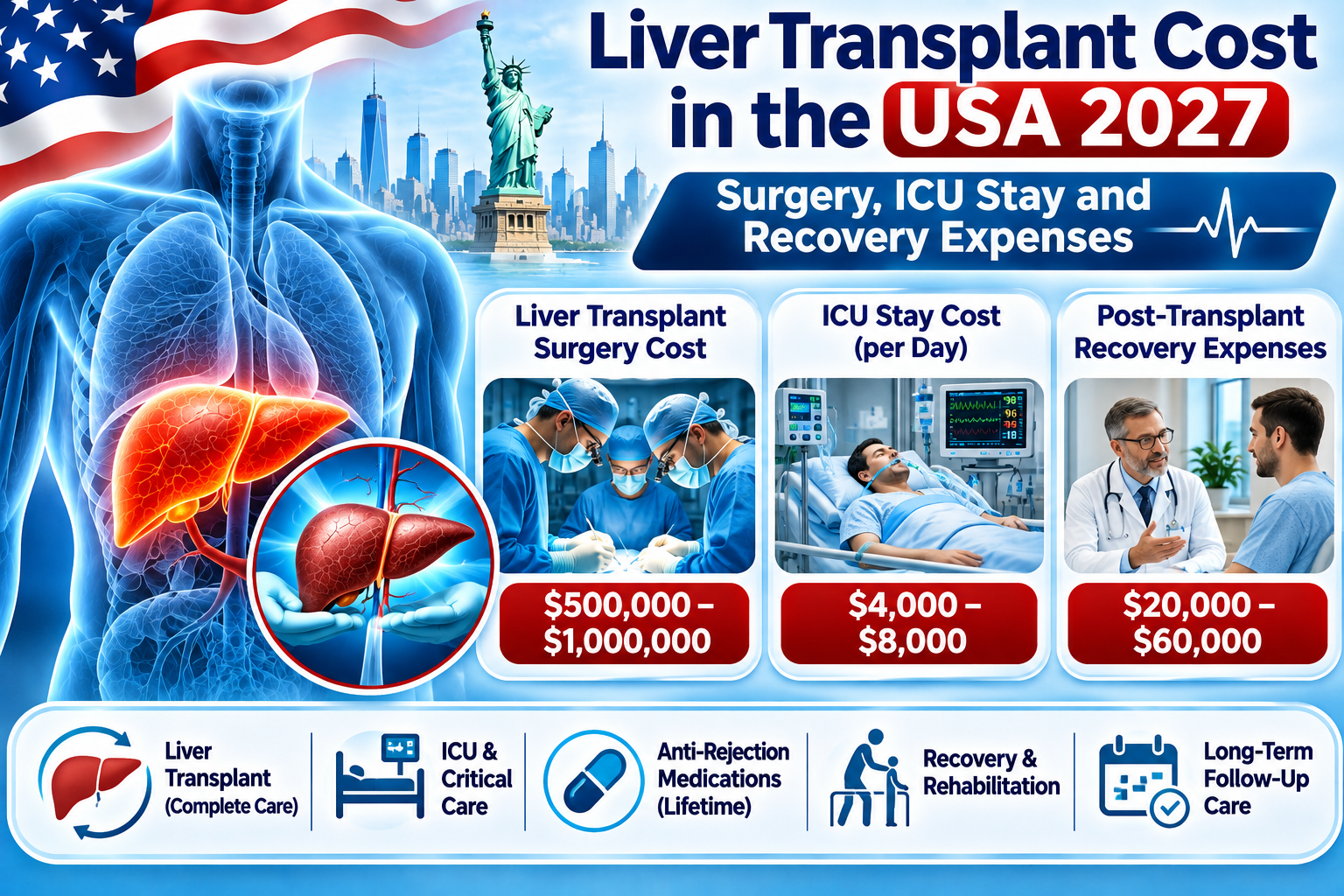
Liver transplantation is one of the most advanced and life-saving surgical procedures available in modern healthcare. For patients experiencing severe liver failure, a transplant may provide an opportunity for longer survival and improved quality of life. However, liver transplant surgery in the United States involves substantial medical expenses, including surgical fees, intensive care unit charges, donor organ procurement, medications, and long-term recovery services.
Understanding liver transplant costs in the USA in 2027 is particularly important for patients and families preparing financially for treatment. The overall expense depends on hospital location, insurance coverage, the patient’s medical condition, surgical complexity, and postoperative care requirements.
Published United States transplant cost research has estimated average billed charges exceeding $1 million for a liver transplant episode, including related care. Actual insurance-negotiated payments and patient out-of-pocket expenses can be substantially lower. These historical figures provide a planning reference, not a confirmed national price for 2027.
This detailed guide explores estimated liver transplant surgery costs, ICU expenses, hospitalization, insurance coverage, medications, and recovery-related financial considerations.
What Is a Liver Transplant?
A liver transplant is a surgical procedure in which a severely damaged or failing liver is replaced with a healthy liver from a deceased or living donor. The procedure is generally considered when other available treatments cannot adequately manage advanced liver disease.
The liver performs essential functions, including filtering toxins, producing important proteins, processing nutrients, supporting digestion, and regulating various metabolic processes.
When liver function deteriorates significantly, patients may experience serious complications affecting multiple organs.
Common medical conditions that may lead to liver transplantation include:
- Advanced liver cirrhosis.
- Chronic hepatitis-related liver damage.
- Acute liver failure.
- Selected cases of liver cancer.
- Inherited metabolic liver disorders.
- Advanced fatty liver disease.
- Autoimmune and cholestatic liver diseases.
Not every patient with these conditions requires transplantation. Eligibility depends on disease severity, overall health, transplant-center evaluation, and established medical criteria.
Liver Transplant Cost in the USA in 2027
The estimated cost of liver transplantation in the United States varies dramatically according to how expenses are measured. Hospital billed charges, negotiated insurance rates, Medicare payments, and actual patient responsibility represent different financial amounts.
For perspective, a widely referenced 2025 United States transplant cost analysis estimated approximately $1.02 million in average billed charges for a liver transplant episode. This included pretransplant services, organ acquisition, hospitalization, professional fees, postdischarge care, and outpatient medications.
For 2027, this historical benchmark suggests that comprehensive billed charges may exceed $1 million, although actual prices cannot be predicted precisely. Individual cases may cost significantly more or less.
Estimated Liver Transplant Cost Breakdown
| Medical Expense | Illustrative Cost (USD) |
|---|---|
| Pretransplant Evaluation and Testing | $60,600 |
| Donor Organ Acquisition | $175,500 |
| Transplant Hospitalization and Facility Charges | $552,100 |
| Physician Professional Fees | $60,600 |
| Postdischarge Medical Care | $141,500 |
| Outpatient Medications | $27,500 |
| Total Historical Billed-Charge Benchmark | $1,017,800 |
Note: These amounts are rounded estimates based on a 2025 national billed-charge benchmark, presented for 2027 financial planning. They are not independently verified 2027 prices. ICU and surgical facility expenses are generally included within hospitalization charges, so they should not be added again.
USA Liver Transplant Cost Comparison
Even within the United States, transplant expenses vary significantly between healthcare facilities. Insurance contracts, regional operating costs, hospital resources, and clinical complexity all influence pricing.
| USA Cost Category | Financial Reference |
|---|---|
| Comprehensive Transplant Episode | Approximately $1.02 million in historical average billed charges |
| Hospital Facility Cash Pricing | Around $501,000 historical median in one transparency dataset |
| Hospital Negotiated Facility Rate | Around $138,000 historical median in one transparency dataset |
| Patient Out-of-Pocket Expense | Depends on insurance benefits and eligibility |
These figures represent different pricing methods and cannot be compared as equivalent full-treatment packages. Facility rates may exclude organ acquisition, physician services, outpatient medication, and follow-up treatment.
Liver Transplant Surgery Expenses
Liver transplantation requires a highly specialized surgical team, advanced operating equipment, anesthesia services, and careful coordination between donor and recipient medical teams.
During the procedure, surgeons remove the diseased liver and connect the donor liver to the recipient’s blood vessels and bile ducts.
The operation may take several hours, depending on anatomical complexity, previous surgeries, and the patient’s medical condition.
Surgical expenses may include:
- Transplant surgeon and assistant surgeon services.
- Anesthesiology and intraoperative monitoring.
- Operating room facilities and equipment.
- Blood products and laboratory testing.
- Surgical instruments and specialized supplies.
- Immediate postoperative medical monitoring.
Patients should ask whether the quoted transplant package includes all professional services or whether individual specialists bill separately.
ICU Stay Cost After Liver Transplant Surgery
Intensive care is an important component of postoperative liver transplant treatment. Many patients initially recover in an ICU where healthcare professionals closely monitor liver function, circulation, breathing, and possible complications.
The duration of intensive care varies. Some patients need only a short ICU admission, while others require prolonged treatment because of complications or underlying health conditions.
ICU services may include continuous cardiac monitoring, ventilator support, intravenous medications, blood testing, specialized nursing, and infection surveillance.
Hospital charges can increase considerably when intensive care is prolonged. However, published transplant episode estimates often include ICU services within the overall hospitalization amount.
Patients should therefore avoid calculating ICU costs separately unless their hospital provides an itemized quotation showing that these services are excluded.
Hospital Stay and Recovery Expenses
After leaving intensive care, patients usually continue recovering in a specialized hospital unit. Medical teams monitor the new liver, adjust medications, assess wound healing, and evaluate the patient’s nutritional and physical condition.
Hospital discharge depends on clinical stability rather than a fixed number of days. Complications may extend hospitalization and increase treatment expenses.
Following discharge, patients typically require frequent outpatient appointments, laboratory tests, medication adjustments, and ongoing transplant-team supervision.
Additional recovery expenses may include transportation, temporary accommodation near the transplant center, caregiver support, rehabilitation, and time away from employment.
These indirect costs can create financial challenges even for patients whose medical procedures are substantially covered by insurance.
Immunosuppressive Medication Costs
Patients receiving a liver transplant generally require long-term immunosuppressive medications to reduce the risk of organ rejection.
Common medications include tacrolimus, mycophenolate, corticosteroids, and other treatments selected according to individual medical needs.
Medication costs depend on dosage, drug selection, generic availability, pharmacy pricing, insurance formularies, and patient assistance programs.
Some transplant recipients face substantial annual medication expenses, especially without adequate prescription coverage. Patients may also require medicines to prevent infections or manage additional health conditions.
Consistent medication use is essential. Patients should never stop or reduce prescribed immunosuppressive therapy because of cost without discussing alternatives with their transplant team.
Factors Influencing Liver Transplant Prices
1. Hospital Location and Reputation
Specialized transplant centers operate with extensive clinical resources, experienced personnel, and sophisticated equipment. Geographic differences in staffing, facility costs, and reimbursement agreements may affect prices.
2. Patient Medical Condition
Patients with severe complications, infections, kidney dysfunction, or other medical conditions may require more intensive treatment before and after transplantation.
Additional medical services can increase total expenses considerably.
3. Donor Organ Procurement
Organ procurement involves medical evaluation, donor-related services, preservation, transportation, and coordination between transplant organizations.
Living-donor transplantation may involve additional donor evaluation and surgical services. Patients should request clarification regarding which donor-related expenses are covered.
4. Health Insurance Coverage
Insurance coverage can substantially reduce the amount paid directly by patients. However, deductibles, coinsurance, network restrictions, and plan-specific transplant benefits may apply.
Some insurance providers require treatment at designated transplant centers to qualify for preferred coverage.
5. Postoperative Complications
Infections, bleeding, bile duct problems, organ rejection, and other complications may require additional hospitalization, imaging, procedures, or medications.
Such complications can substantially increase treatment costs and extend recovery.
Liver Transplant Cost With Health Insurance
Many comprehensive health insurance plans provide coverage for medically necessary liver transplantation, subject to eligibility, medical review, and policy requirements.
Patients should confirm coverage for transplant evaluation, surgery, organ acquisition, hospitalization, immunosuppressive medications, and postoperative care.
For eligible beneficiaries, Medicare may cover liver transplantation at approved facilities. Medicare Part A generally addresses qualifying hospital services, while Part B may cover physician services and certain immunosuppressive medications under applicable conditions.
Medicaid coverage varies by state, and private insurance benefits depend on the specific plan.
Patients should speak with a transplant financial coordinator before treatment to understand expected personal expenses and potential coverage limitations.
Liver Transplant Cost Without Insurance
Uninsured patients may face substantial hospital charges, sometimes approaching or exceeding seven figures for comprehensive transplant-related treatment.
However, published billed charges do not necessarily represent the amount a hospital will ultimately collect from a self-paying patient.
Some transplant centers provide financial assistance, negotiated payment arrangements, or access to charitable resources. Eligibility and availability differ by institution.
Because transplantation requires long-term medical management, centers also assess whether patients have a realistic plan for obtaining essential medications and follow-up care.
Patients without insurance should contact transplant financial counselors to discuss available options and requirements.
How to Manage Liver Transplant Expenses
Careful financial preparation can help patients and families better understand transplant-related costs.
- Request a comprehensive written treatment estimate.
- Verify hospital and surgeon insurance network participation.
- Discuss financial assistance and charity care programs.
- Confirm prescription medication benefits.
- Ask about travel and temporary accommodation support.
- Review potential rehabilitation expenses.
- Maintain organized records of medical bills.
- Discuss long-term follow-up costs with the transplant coordinator.
Patients should also consider the financial impact of unpaid leave, transportation, and caregiver responsibilities.
Medical urgency and transplant suitability must always take priority over price comparisons.
Long-Term Recovery After Liver Transplantation
Recovery after liver transplantation is a gradual process requiring consistent medical supervision. Patients generally undergo frequent laboratory testing during early recovery, followed by continued monitoring as their condition stabilizes.
Healthy nutrition, appropriate physical activity, infection prevention, and medication adherence support long-term recovery.
Some individuals return to many normal activities within several months, while others require additional rehabilitation or medical treatment.
Long-term costs may include specialist consultations, blood tests, imaging, prescription medications, and treatment for complications.
Financial planning should therefore account for ongoing healthcare needs rather than focusing exclusively on the original operation.
Frequently Asked Questions
How much does a liver transplant cost in the USA in 2027?
Historical national research has estimated approximately $1.02 million in average billed charges for a comprehensive liver transplant episode. Actual 2027 expenses depend on hospital pricing, medical complexity, insurance arrangements, and treatment requirements.
Does insurance cover liver transplant surgery?
Many insurance plans cover medically necessary liver transplantation, subject to specific benefits, authorization rules, and transplant-center requirements.
How long is the ICU stay after a liver transplant?
ICU duration varies according to recovery and medical complications. Some patients require relatively brief monitoring, while others need extended intensive care.
Are medications necessary after transplantation?
Yes. Most liver transplant recipients require lifelong immunosuppressive treatment and regular medical monitoring to reduce rejection risk.
Can patients receive financial assistance?
Some hospitals and charitable organizations offer assistance with eligible medical expenses, transportation, lodging, or medication access. Availability varies.
Conclusion
Liver transplant costs in the USA in 2027 can be substantial because treatment involves complex surgery, donor organ procurement, intensive care, hospitalization, medications, and long-term recovery.
Historical national estimates place comprehensive billed charges near or above $1 million, but actual payments and patient financial responsibility vary significantly.
Patients should obtain detailed estimates, verify insurance benefits, explore financial assistance, and discuss postoperative expenses with their transplant team.
Ultimately, successful transplant planning requires both appropriate medical care and a sustainable strategy for lifelong follow-up treatment.
Medical Disclaimer: This article provides general educational and financial information only. It is not a substitute for professional medical advice. Cost figures are historical benchmarks or planning estimates, not guaranteed 2027 quotations. Patients should confirm treatment decisions, eligibility, and expenses with qualified healthcare professionals and insurance providers.
